Live-in Carer for an Elderly Parent in Nigeria: Everything You Need to Know in 2026

There comes a moment in many Nigerian families when the question can no longer be avoided. Perhaps your mother has fallen twice in the past month. Perhaps your father has been managing diabetes and hypertension largely on his own, and you live hours away. Perhaps a hospital discharge letter has been sitting on the kitchen table for weeks, and nobody is quite sure what happens next.
If you are searching for a live-in carer for your elderly parent in Nigeria, you have probably already spent some time wondering: Is this even available here? How much does it cost? How do I know they are trustworthy? And what exactly does a live-in carer do?
This guide answers all of those questions clearly and practically. It is written specifically for Nigerian families at home and in the diaspora who want to understand their options, make an informed decision, and find reliable professional care for an elderly parent.
What Is a Live-in Carer? Understanding the Basics
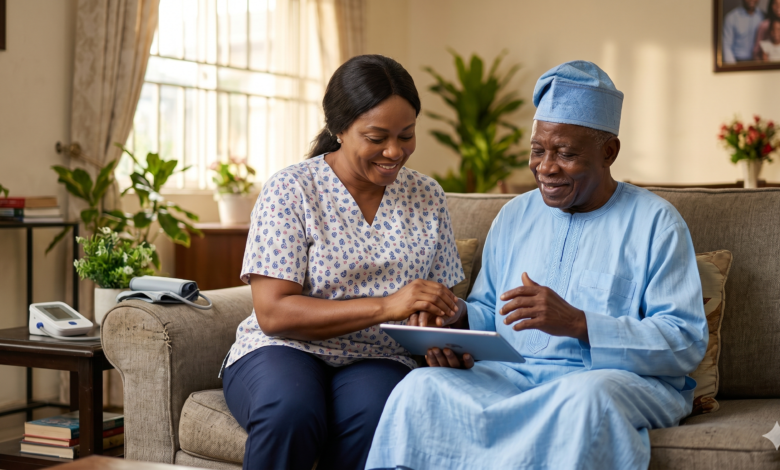
A live-in carer is a trained care professional who moves into the home of the person they are caring for, providing round-the-clock support and assistance with daily living. Unlike a nurse who visits for an hour or a relative who helps when available, a live-in carer is present continuously, available throughout the day and accessible at night when the risks of falls, medication errors, and health deterioration are highest.
It is important to understand that a live-in carer is not the same as a domestic worker or house help. While there may be some overlap in tasks like preparing meals or light housekeeping, a professional live-in carer brings formal training in personal care, basic health monitoring, and the management of age-related conditions. They work under a structured care plan developed by a qualified health professional.
In Nigeria, live-in carers are sometimes also referred to as home care attendants, caregivers, care aides or simply carers. A live-out carer performs the same role but returns home each evening, typically working a defined shift of eight to twelve hours per day.
Why Families in Nigeria Are Increasingly Choosing Live-in Care
For most of Nigeria’s history, the care of elderly parents has fallen entirely on the family, usually on adult children, daughters-in-law, or younger relatives who live in the same compound. This model worked reasonably well when families lived together across generations and the demands of caring for the elderly were manageable.
That picture is changing rapidly today.
Nigeria has the highest number of older people on the African continent and ranks 19th globally, with the population of Nigerians aged 65 and older projected to nearly triple by 2050. At the same time, Nigeria’s aging population is expanding rapidly, with older adults facing intersecting challenges of poverty, chronic disease burden, and inadequate access to healthcare.
Several social and economic forces are driving families towards professional home care:
Urbanisation and dispersed families. Adult children increasingly live in different cities from their parents or in the UK, the US, or Canada. The assumption that someone in the family will always be nearby no longer holds in the way it once did.
More complex medical needs. Elderly Nigerians are increasingly living with chronic conditions such as hypertension, diabetes, stroke sequelae, dementia, Parkinson’s disease, and arthritis that require consistent daily management beyond what untrained family members can safely provide.
Career and financial pressures. The adult child who would traditionally care for a parent is now often in full-time employment, managing their own children, and simply does not have the time or the clinical knowledge to provide adequate care.
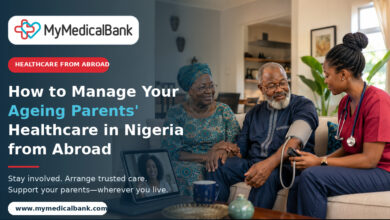
The diaspora reality. A very significant number of Nigerian families making enquiries about live-in care are adult children based abroad who need to arrange reliable, verifiable, professional care for parents remaining in Nigeria. This is one of the fastest-growing segments of demand for home care services in the country. This has increased in recent times with the japa syndrome with many young professionals migrating from Nigeria in search of greener pastures abroad.
What Does a Live-in Carer Actually Do?
The daily responsibilities of a live-in carer depend on the specific needs of your parent, as set out in a personalised care plan. However, most live-in care arrangements in Nigeria include the following:
Personal Care and Hygiene
Assistance with bathing, dressing, grooming, oral hygiene, and toileting. For elderly parents who are partially mobile or bed-bound, this is often the most time-intensive part of the role and requires both skill and sensitivity.
Medication Management
Ensuring that medications are taken at the correct times and in the correct doses. A carer does not prescribe or administer injections, but they play a critical role in adherence — one of the most common failure points in managing chronic conditions like hypertension and diabetes at home.
Mobility and Fall Prevention
Assisting with movement around the home, helping with transfers (bed to chair, chair to toilet), encouraging appropriate levels of physical activity, and identifying and removing hazards that could cause a fall. Falls are one of the leading causes of serious injury and hospitalisation in elderly Nigerians.
Meal Preparation and Nutrition
Preparing appropriate, nutritious meals that account for any dietary requirements or restrictions, particularly relevant for parents managing diabetes, kidney disease, or cardiovascular conditions.
Companionship and Emotional Support
Social isolation is a serious and underappreciated health risk for elderly Nigerians, particularly those who live alone or whose children are abroad. A live-in carer provides consistent human companionship, conversation, and mental engagement that significantly affects quality of life and cognitive health.
Basic Health Monitoring
Observing and recording changes in condition — appetite, mood, mobility, skin condition, and any new symptoms and reporting these to the supervising healthcare professional or family in a timely way.
Household Support
Light housekeeping, laundry, and keeping the living space clean and safe. It is important to have clear expectations here: a live-in carer’s primary role is care, not domestic work, and the two should not be conflated.
Accompanying to Appointments
In some arrangements, the carer may accompany your parent to hospital, clinic, or pharmacy appointments, ensuring they arrive safely, their questions are asked, and any instructions given are understood and recorded.
An Important Distinction: Live-in Carer vs. Live-in Nurse
Many families use these terms interchangeably, but the difference matters significantly.
A live-in carer (also called a home care attendant) is a trained but non-licensed care professional. They provide personal and daily living support under the supervision of a qualified health professional. They do not administer injections, manage clinical procedures like wound care, or make medical decisions.
A live-in nurse is a registered nursing professional who can perform clinical procedures, administer prescribed medications including injectables, manage medical equipment such as oxygen or catheter care, and respond appropriately to medical emergencies.
For many elderly parents — particularly those whose needs are primarily personal care, companionship, and supervision — a live-in carer is appropriate and considerably more affordable. For parents with active medical needs such as post-stroke care, wound management, catheter care, or insulin-dependent diabetes, a nurse (or regular nurse visits supplementing carer support) may be necessary.
The right way to determine this is through a professional initial assessment, a visit by a qualified health professional who evaluates your parent’s condition, documents their needs, and produces a written care plan. This step is not optional. It is the foundation of safe, appropriate home care.
How the Live-in Carer Booking Process Works in Nigeria
If you are arranging live-in care for an elderly parent in Nigeria for the first time especially from abroad understanding the process clearly will save you time, confusion, and money.
At MyMedicalBank, the process works in four clear stages:
Stage 1: Initial Health Assessment
Before any carer is deployed, a qualified health professional, a doctor or registered nurse visits your parent at home to carry out a full assessment. They document the current health status, identify risks, note any specific care requirements, and produce a written assessment report. This assessment determines the type of carer needed, the level of supervision required, and what the care plan should include.
The cost of this initial assessment is ₦25,000 (by a nurse) to ₦40,000 (by a doctor). This is a one-time cost that forms the basis of the entire care arrangement.
Stage 2: Care Plan Development
Based on the assessment report, a personalised written care plan is developed. This sets out exactly what the carer will do each day, what they will monitor and report, what escalation procedures apply if the parent’s condition changes, and what the carer’s schedule looks like.
Stage 3: Carer Matching and Deployment
A carer is matched from the verified network based on the specific requirements of the care plan experience with the relevant conditions, gender preference where applicable, language considerations, and location. At MyMedicalBank, at least two carers are assigned to work on alternating shift patterns, ensuring continuity and preventing carer burnout.
Stage 4: Supervision and Ongoing Reporting
A qualified carer working alone is not sufficient. Ongoing professional supervision is essential. This means regular check-in visits or virtual consultations from a supervising nurse, daily care reports shared with the family, and a clear escalation pathway if something changes. Daily care reports saved to the MyMedicalBank platform mean that families abroad can monitor their parent’s care in real time.
How Much Does a Live-in Carer Cost in Nigeria in 2025?
This is typically the first question families ask. The honest answer is: it depends on several factors, but it is more affordable than most people initially fear.
Non-medical support for seniors in Nigeria typically costs ₦540,000 – ₦1,050,000 monthly, depending on hours and caregiver qualifications, with rates expected to increase by about 24–36% in 2025 due to medical inflation and higher caregiver training standards.
At MyMedicalBank, the live-in and live-out carer service is structured transparently:
| What You Get | Cost |
|---|---|
| Initial assessment by a registered nurse | ₦25,000 (one-time) |
| Initial assessment by a doctor | ₦40,000 (one-time) |
| Live-in or live-out carer (monthly fee) | ₦140,000 – ₦200,000/month |
| Minimum of 2 carers on alternating shifts | Included |
| Written care plan | Included |
| Daily care reports | Included |
| Carer supervision by a registered nurse | Included |
| Medical follow-up by a doctor (telemedicine) | Included |
| 24/7 dedicated customer support | Included |
| Secure storage of medical records on MMB App | Included |
Several factors influence where in that range the monthly fee lands:
Location. Live-in care in Lagos, Abuja, and Port Harcourt is typically at the higher end of the range due to cost of living and travel requirements. Care in smaller cities and towns is usually more affordable.
Level of care needed. A parent who requires personal care and companionship will cost less to care for than one who requires intensive daily support due to stroke, dementia, or significant mobility impairment.
Live-in vs. live-out. A live-out carer who works defined daily hours is generally less expensive than a full live-in arrangement, though it provides less overnight coverage.
Duration. Longer-term arrangements often attract more favourable rates than short-term or emergency bookings.
It is also worth noting that compared with the cost of a private nursing home or long-term residential care facility in Nigeria — which can range from ₦300,000 to over ₦1,000,000 per month — a live-in carer in the family home is frequently the more affordable option, while also offering the enormous benefit of familiar surroundings and family proximity.
Choosing a Live-in Carer: What to Look For
The quality of care your parent receives depends significantly on how well the carer has been selected and verified. Here are the essential criteria:
Training and Certification
A professional live-in carer should have completed formal training in caregiving covering personal care, basic health monitoring, infection control, fall prevention, and dementia awareness. Ask for the certificate and check the issuing institution.
Background Verification
This is non-negotiable. Any person entering your parent’s home particularly to live there must have been background-checked. This includes identity verification, reference checks from previous placements, and criminal record screening where possible.
Experience with Relevant Conditions
If your parent has dementia, stroke, Parkinson’s disease, or diabetes, the carer should have demonstrable experience managing these conditions. Generic caregiving experience is not sufficient.
Agency Supervision
A carer working independently and unsupervised introduces significant risk. Reputable home care arrangements include an agency or platform that maintains clinical oversight with a supervising nurse available, a complaints process, and the ability to replace a carer if needed.
Daily Reporting
You should receive regular, structured updates on your parent’s condition. Not occasional phone calls structured daily reports that document meals, medications, mood, mobility, and any concerns. This is especially important for families managing care remotely from abroad.
Insurance and Accountability Framework
What happens if the carer is sick and cannot come? What happens if something goes wrong? A professional arrangement will have clear answers to these questions before you commit.
Special Considerations for Families in the Diaspora
If you are reading this from the UK, the United States, Canada, or elsewhere and trying to arrange care for an elderly parent in Nigeria, your situation has some specific complexities worth addressing directly.
You cannot verify things yourself in person. This makes the quality of the agency’s verification processes absolutely critical. You need to be able to trust that the organisation arranging the care has done the due diligence that you cannot do from a distance.
Communication and reporting must be structured. Informal arrangements your relative finding someone through word of mouth, or a domestic worker who has “always been around” taking on a care role are high risk when you cannot monitor them. You need daily written reports, accessible from anywhere.
Time zone differences affect oversight. A 24/7 support line that can be reached outside Nigerian business hours including via WhatsApp is essential.
Payment infrastructure matters. You will need to be able to pay for care from abroad, ideally in naira or via a reliable international payment mechanism, without depending on a local relative to manage funds on your behalf.
Emergency escalation. If your parent’s condition deteriorates or there is a medical emergency, what is the procedure? This needs to be defined clearly before care starts — not worked out in a panic at 2am UK time.
MyMedicalBank’s home care service is specifically designed to serve diaspora families. All care is arranged, monitored, and reported through the platform. Families based abroad can review daily care reports, communicate with the care team via WhatsApp, and manage their parent’s care remotely with full visibility.
Common Conditions That Often Lead Families to Arrange Live-in Care
While every family’s situation is different, certain conditions most frequently lead to the decision to arrange a live-in carer in Nigeria:
Stroke recovery. A parent who has suffered a stroke often requires intensive physical support, medication management, and monitoring for signs of a second stroke. A well-trained carer — working alongside a physiotherapist for rehabilitation — can significantly improve recovery outcomes.
Dementia and Alzheimer’s disease. As dementia progresses, a parent may become confused, unsafe with the cooker or stove, prone to wandering, and unable to manage their personal care. A live-in carer provides safety, structure, and the consistency that dementia patients need.
Hip fracture or mobility impairment. Post-surgical recovery after a hip replacement or fracture requires careful support with mobility, fall prevention, exercises, and personal care. This is often a trigger for first-time care arrangements.
Diabetes management. Poorly controlled diabetes in elderly patients can lead to hypoglycaemia, falls, foot complications, and rapid deterioration. A carer who understands the daily disciplines of diabetes management — meal timing, blood sugar monitoring, medication adherence, foot care — can make a material difference.
General frailty and safety concerns. Sometimes there is no single diagnosis but a growing accumulation of concern — a parent who is losing weight, forgetting things, struggling with the stairs, or spending too long alone. A live-in carer addresses this holistically.
Post-hospitalisation discharge care. When an elderly parent is discharged from hospital after surgery, illness, or a medical event, the risk of readmission in the first 30 days is highest. A professional carer during this critical period reduces that risk significantly.
Frequently Asked Questions About Live-in Carers in Nigeria
Can a live-in carer administer my parent’s medications? A live-in carer can prompt and supervise oral medication — reminding your parent to take their pills at the right time and recording that this has been done. They cannot administer injections or perform clinical procedures. If your parent requires injections or clinical medication management, a nurse — either live-in or visiting regularly — is necessary.
What if the carer and my parent do not get along? Personality fit matters in care, and it sometimes takes time to find the right match. Reputable care arrangements include a review period and a process for replacing a carer if the relationship is not working. This should be discussed and agreed before care begins.
Can my parent still see their regular doctor? Absolutely. A live-in carer works alongside your parent’s existing medical team, not in place of them. They can accompany your parent to appointments, record what the doctor says, and ensure any new instructions are followed.
Do carers work every day without a break? Professional live-in care arrangements should not rely on a single carer working seven days a week with no rest. Carer burnout leads to declining quality of care and high turnover. At MyMedicalBank, a minimum of two carers are assigned to work on alternating shift patterns.
We have domestic staff already. Do we still need a carer? Yes, if your parent has care needs that go beyond household tasks. A domestic worker or cook is not trained in personal care, health monitoring, or the safe management of age-related conditions. The two roles are complementary, not interchangeable.
My parent does not want a carer. How do I handle this? This is one of the most common and emotionally difficult challenges families face. Many elderly parents interpret the arrival of a carer as a loss of independence or a sign that they are failing. A gentle approach — framing the carer as a helper or companion rather than a medical necessity, and starting with part-time or daytime-only support — can help. The initial assessment visit can also be a useful bridge, as the health professional can speak directly with your parent about their needs.
Why MyMedicalBank for Live-in Care in Nigeria
MyMedicalBank is a registered Nigerian health technology company with a nationwide network of verified healthcare professionals across all 36 states and the FCT. Our home care service is not a referral directory it is a fully managed care service with clinical oversight from start to finish.
What makes the difference:
- Every carer is trained, verified, and background-checked before placement
- Care begins with a professional assessment by a qualified doctor or nurse
- A minimum of two carers work on alternating shifts — no single-carer dependency
- Daily written care reports are accessible to families from anywhere in the world
- A supervising registered nurse maintains clinical oversight throughout the care arrangement
- A doctor is available for medical consultation and follow-up via telemedicine
- All care records are stored securely on the MyMedicalBank app — accessible to the family at any time
- 24/7 WhatsApp support is available for families and carers at any time
Our live-in and live-out carer service is available from ₦140,000 per month, and the initial assessment — the professional visit that starts everything — is from ₦25,000.
How to Get Started
Getting professional live-in care for your elderly parent does not have to be complicated.
Step 1: Book an initial assessment. A qualified nurse or doctor will visit your parent at home to assess their needs and produce a written care plan. This is the essential first step — it takes the guesswork out of what kind of care is needed and at what level.
Step 2: Review the care plan and agree the arrangement. Based on the assessment, you will receive a written plan and a confirmed monthly fee before any ongoing commitment is made.
Step 3: A carer is matched and deployed. We match from our verified network based on your parent’s specific needs. Care begins on an agreed date.
Step 4: Ongoing care with full visibility. Daily reports, nurse supervision, and our 24/7 support team mean you are never managing your parent’s care blind — even from the other side of the world.
Book a Live-in Carer for Your Elderly Parent Today
If you are ready to take the next step, we are ready to help you. You can book an initial assessment online, send us a WhatsApp message to discuss your situation first, or call our care coordination team directly.
📅 Book a Home Care Assessment →
📞 Call us: +234 (0) 802 759 0165 | +234 (0) 705 997 7225
MyMedicalBank is a registered Nigerian health technology company (RC1548912) and UK company (No. 8907996). Our home care professionals are verified, licensed, and background-checked. Care is available across all 36 states and the FCT.