How to Manage Your Ageing Parents’ Healthcare in Nigeria from Abroad: A Must Read

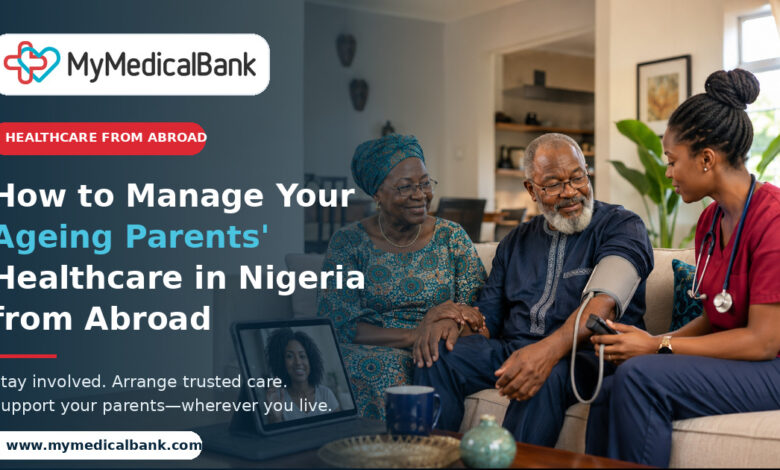
For millions of Nigerians living in the United Kingdom, the United States, Canada, and other parts of the world, one of the most quietly persistent sources of worry is the health of their parents back home.
Nigeria is home to an estimated 7 million people aged 60 and above, a number that is growing steadily as life expectancy improves. Yet the country’s healthcare infrastructure — though improving — remains under significant strain, and the burden of elder care continues to fall primarily on families rather than formal support systems.
The challenge is uniquely acute for Nigerians in the diaspora. Unlike a sibling who lives in the same city or a neighbour who can check in, a son or daughter living overseas must manage everything — doctor appointments, prescription refills, emergency responses, hospital admissions — from thousands of kilometres away, across time zones, and often without reliable information on what is actually happening on the ground.
This is not a niche concern. According to the World Bank, Nigeria was the fifth largest recipient of remittances in the world in 2023, receiving over $20 billion. A significant portion of that money goes directly toward healthcare expenses for ageing relatives. And yet, many diaspora Nigerians have no formal system in place — they rely instead on phone calls, WhatsApp messages from relatives, and the goodwill of neighbours.
The good news is that this situation is changing. Digital health platforms, telemedicine services, professional caregiver agencies, and health insurance products designed specifically for the Nigerian market have made it far more possible to manage an ageing parent’s healthcare from abroad with structure, confidence, and peace of mind.
In this article, we offer some practical strategies for managing your ageing parents’ healthcare in Nigeria from abroad.
1. Set Up a Trusted Local Caregiver or Care Manager – Managing Parents’ Healthcare from Abroad
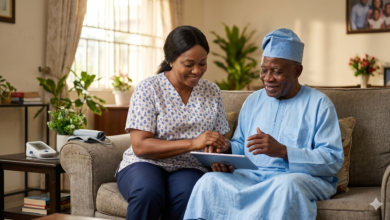
The single most impactful thing most diaspora Nigerians can do is to arrange for a reliable, trained person to be physically present in their parent’s life. This does not necessarily mean a full-time live-in caregiver (though for parents with significant health needs, that may well be the right answer). It might mean a part-time home care attendant who visits three times a week, a care manager who coordinates appointments and medications, or a trusted family member who has been formally designated and financially supported to take on this role.
Professional caregiver services have grown significantly in Nigeria over the past several years. Agencies now offer trained home care attendants who are vetted, insured, and experienced in elder care, including managing chronic conditions, post-surgical recovery, and dementia care. Platforms like MyMedicalBank allow families to book caregiver services directly and maintain oversight of care delivery without being physically present.
The key principle here is formalisation. A sibling who casually checks in on your parent is different from a sibling who has been given explicit responsibility, a clear task list, a budget, and a communication protocol. Informal arrangements often break down precisely when they are most needed.
2. Use Telemedicine for Remote Doctor Consultations – Managing Parents’ Healthcare from Abroad
Telemedicine has been one of the most significant developments in Nigerian healthcare in recent years, and for diaspora Nigerians managing a parent’s health from overseas, it is genuinely transformative. Rather than waiting for a relative to take your parent to a hospital — navigating traffic, queues, and availability — you can now connect your parent with a qualified doctor via a video or audio call, often within hours.
The benefits are especially significant for routine management of chronic conditions such as hypertension, diabetes, and heart disease, which represent the most common health concerns for older Nigerians. Monthly or bi-monthly telemedicine consultations can replace many of the routine hospital visits that would otherwise require physical attendance, freeing up hospital trips for situations that truly require them.
Platforms like MyMedicalBank offer telemedicine services connecting patients with verified Nigerian doctors who understand the local context — including available medications, typical laboratory facilities, and the social realities of elder care in Nigeria. The overseas family member can participate in the call directly, asking questions, clarifying information, and ensuring their parent’s concerns are fully heard.
3. Identify and Register with Quality Hospitals Close to Your Parents – Managing Parents’ Healthcare from Abroad
Knowing in advance which hospitals and clinics near your parents are reliable, trustworthy, and capable of handling their specific health needs is one of the most practical steps you can take as a diaspora family member. Too often, families discover the quality of local healthcare options only in the middle of a crisis — when a parent has collapsed, when a diagnosis has been missed, or when a referral is urgently needed.
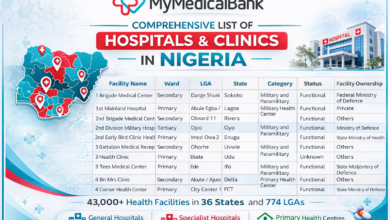
Taking the time now — before any emergency — to research, visit (if possible during a home visit), and register your parents at a quality primary care facility, and to identify the nearest capable secondary and tertiary care hospital, is time very well invested. Platforms like MyMedicalBank maintain a directory of over 42,000 hospitals and clinics across Nigeria, allowing you to search by location, service type, and speciality — a resource that removes much of the guesswork.
Your goal is to have clear, pre-established relationships at three levels: a primary care doctor or clinic for routine care and management of chronic conditions; a secondary care facility for specialist consultations and investigations; and a tertiary hospital capable of handling complex emergencies, including surgical care.
4. Set Up a Dedicated Healthcare Fund or Insurance Plan – Managing Parents’ Healthcare from Abroad
One of the most consistent sources of preventable harm to older Nigerians is delayed treatment due to the inability to pay at the point of care. Nigeria’s out-of-pocket health expenditure remains among the highest in the world as a percentage of total health spending — meaning that for most Nigerians, when illness strikes, the immediate question is not “where do I go?” but “how do I pay for this?” For diaspora families managing a parent’s care from overseas, the combination of time zone differences and delayed bank transfers can mean that a treatable condition escalates while money is being arranged.
The practical solution is to have funds pre-positioned and accessible before they are needed. This means establishing a dedicated healthcare fund — either a local bank account in Nigeria held jointly with a trusted family member, or a regular remittance that builds a reserve — combined with a health insurance plan that covers your parent’s primary and specialist care needs.
Health insurance for older Nigerians has historically been difficult to access, particularly for those above 65, but the market has expanded in recent years. Several private health insurance providers now offer plans specifically designed for older adults, and some diaspora-focused financial platforms enable families overseas to purchase Nigerian health insurance on behalf of their relatives. The National Health Insurance Authority (NHIA) has also expanded its mandate, and some states have implemented social health insurance schemes that can cover older residents.
5. Use Technology to Monitor Health and Stay Connected – Managing Parents’ Healthcare from Abroad
Technology has opened up possibilities for health monitoring that would have been unimaginable a decade ago. For diaspora Nigerians, the combination of consumer health monitoring devices and connected digital platforms now makes it possible to have a meaningful, real-time view of an ageing parent’s health status — blood pressure, heart rate, blood oxygen levels, blood glucose, and even sleep patterns — without being physically present.
Devices such as digital blood pressure monitors, pulse oximeters, and glucometers are widely available and affordable in Nigeria, and their readings can be logged manually or automatically into a digital health record. Some newer devices can even share data directly to an app on your phone. The key is establishing a routine — your parent takes their readings at consistent times, a caregiver or family member logs or shares the results, and you review them regularly and flag any concerning trends to a doctor.
Beyond clinical monitoring, maintaining a consistent emotional connection through regular video calls, voice messages, and family group chats is itself a meaningful health intervention. Loneliness and social isolation are major contributors to poor health outcomes in older adults, and the sense that family overseas is genuinely present and attentive — not just sending money — has real psychological and physiological benefits.
6. Plan Regular Home Visits and Annual Medical Check-ups – Managing Parents’ Healthcare from Abroad
All of the digital tools, caregiving arrangements, and financial plans in the world cannot fully substitute for being physically present with your parents periodically. Regular home visits — ideally at least once a year, more if your parents’ health is complex — serve multiple functions that cannot be replicated remotely. They allow you to directly assess your parents’ living situation, their nutritional status, their emotional well-being, and the actual quality of care they are receiving. They allow you to meet face-to-face with their doctors, their caregivers, and the hospital staff responsible for their care. And they allow your parents to feel genuinely supported rather than administratively managed.
An important discipline during any home visit is to schedule a comprehensive medical check-up for each parent. Annual health screenings — including blood tests, blood pressure assessment, diabetes screening, cardiac assessment where indicated, and cancer screening for age-appropriate cancers — are the foundation of preventive care. Many health problems that become serious and expensive if caught late can be successfully managed if identified early. MyMedicalBank allows you to book comprehensive health check packages at verified facilities across Nigeria ahead of your visit, so that appointments are confirmed and waiting time is minimised.
During your visit, it is also worthwhile to review and update all of the systems you have put in place — the caregiver arrangement, the health records, the financial provisions, the hospital relationships — so that they reflect your parents’ current situation rather than the situation as it was when you last visited.
Managing a parent’s healthcare in Nigeria from abroad is genuinely difficult. It requires consistent attention, good organisation, financial planning, and a willingness to build systems and relationships that can function even when you are not physically present. But it is far more achievable today than it was even five years ago, thanks to the growth of digital health platforms, telemedicine services, professional caregiver agencies, and health insurance products built specifically for the Nigerian market.
The most important step is to begin — to move from informal, reactive arrangements to a structured plan that is documented, shared, and regularly reviewed. Your parents deserve reliable, high-quality care, and you deserve the peace of mind that comes from knowing it is in place.
Do you want to easily book doctor consultations, caregiver services, health check packages, and manage your parents’ medical records from anywhere in the world? Download the MyMedicalBank app today — your gateway to smarter, connected healthcare for your family in Nigeria.